Knee Replacement: Regain Mobility and Live Pain-Free
Expert Joint Replacement by Dr. Debabrata Padhy
Are you struggling with joint pain while walking, climbing stairs, or doing daily activities?
Do you have osteoarthritis, a joint injury, or stiffness that limits your movement?
If yes, knee or hip replacement surgery may be the right solution for you.
Dr. Debabrata Padhy is one of the most trusted orthopedic surgeons in Bhubaneswar, known for his expertise in joint replacement surgeries, especially knee and hip replacements. With years of experience and a compassionate approach, he has helped hundreds of patients regain their independence and lead pain-free lives.
At his clinic, patients receive personalised evaluation and advanced surgical care focused on long-term joint health and improved mobility.
Who Needs Knee Replacement?
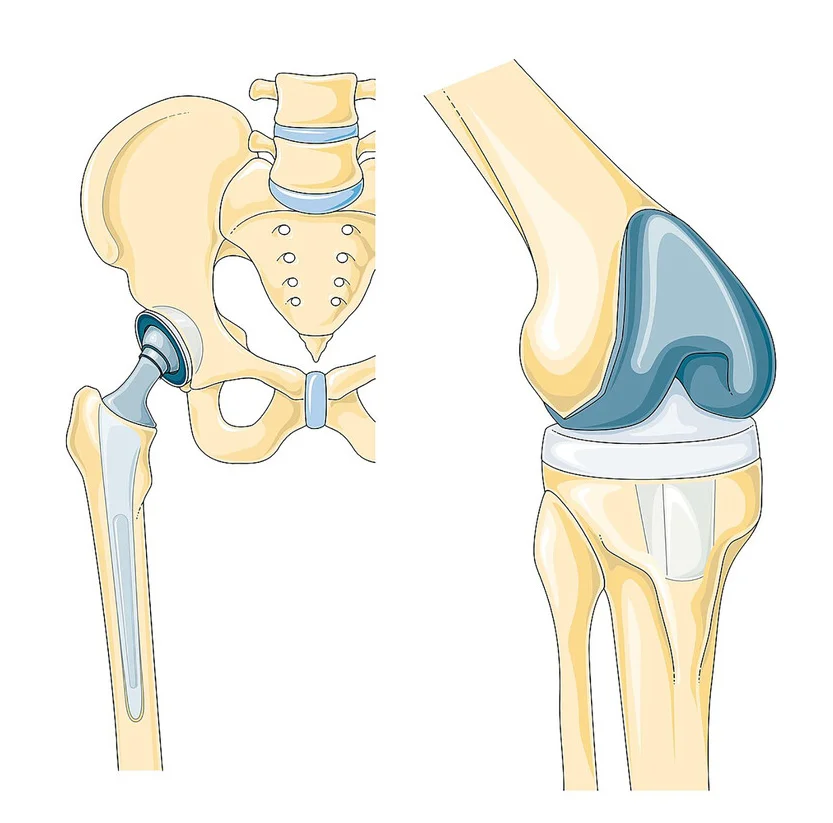
Knee replacement, or knee arthroplasty, is a surgical procedure where damaged parts of the knee joint are replaced with artificial components (prosthesis). It is recommended when knee pain becomes chronic and other treatments like medications, injections, or physiotherapy fail to provide relief.
Who Needs Knee Replacement?
- Persistent knee pain that affects daily life
- Osteoarthritis, rheumatoid arthritis, or post-traumatic arthritis
- Limited movement and swelling in the knee
- Knee injuries or cartilage damage
- Poor response to medications or physiotherapy
Dr. Debabrata Padhy will assess your symptoms and lifestyle before recommending full or partial knee replacement.
Benefits of Knee Replacement
- Relieves long-term knee pain
- Restores joint flexibility and movement
- Makes walking and daily activities easier
- Improves overall quality of life
- Helps you regain confidence and independence
What Is Hip Replacement?
Hip replacement, or hip arthroplasty, is a procedure in which a damaged or worn-out hip joint is replaced with an artificial joint. It is often advised when hip pain becomes severe due to arthritis, fractures, or injury and interferes with mobility and sleep.
Who Needs Hip Replacement?
You may need hip replacement if you experience:
- Chronic hip pain that limits walking or sitting
- Hip stiffness and reduced range of motion
- Arthritis or hip joint degeneration
- Hip injury, fractures, or avascular necrosis
- Helps you regain confidence and independence
- No relief from medications or lifestyle changes
Dr. Debabrata Padhy will evaluate your hip joint condition and overall health before suggesting hip replacement surgery.
Benefits of Hip Replacement
- Eliminates hip pain and discomfort
- Improves walking and standing balance
- Enhances mobility and flexibility
- Restores sleep and overall comfort
- Supports return to an active lifestyle
The preoperative evaluation generally includes a review of all medications being taken by the patient. Anti-inflammatory medications, including aspirin, are often discontinued one week prior to surgery because of the effect of these medications on platelet function and blood clotting. Other preoperative evaluations include complete blood counts, electrolytes (potassium, sodium, chloride), blood tests for kidney and liver functions, urinalysis, chest X-ray, EKG, and a physical examination. Your physician will determine which of these tests are required, based on your age and medical conditions. Any indications of infection, severe heart or lung disease, or active metabolic disturbances such as uncontrolled diabetes may postpone or defer total hip joint surgery.
If the condition of the hip allows it, some doctors will recommend a preoperative exercise program to build muscle and increase flexibility. This can help with recovery.
Total hip joint replacement can involve blood loss. Patients planning to undergo total hip replacement often will donate their own (autologous) blood to be stored for transfusion during the surgery. Should blood transfusion be required, the patient will have the advantage of having his or her own blood available, thus minimizing the risks related to blood transfusions.
Both knee and hip replacement surgeries require:
- Detailed medical evaluation
- X-rays, scans, and physical examination
- Personalized discussion of symptoms and treatment options
Dr. Padhy will recommend the best surgical approach — total or partial joint replacement — depending on the severity of your joint condition.
- Performed under spinal or general anesthesia
- Damaged bone and cartilage are carefully removed
- An artificial joint (metal/plastic) is placed for smooth movement
- Surgical site is tested and securely closed
The procedure usually takes 1–2 hours, followed by a short hospital stay.
Recovery and Aftercare
- Hospital stay: 2–3 days
- Physiotherapy starts within 24 hours post-surgery
- Pain managed with prescribed medications
- Full recovery: 4–6 weeks (varies per patient)
You’ll be given clear instructions for wound care, diet, and gradual return to daily activities.
When Can I Resume Normal Activities?
- Light household work: 3–4 weeks
- Driving: 4–6 weeks (based on control and comfort)
- Walking, swimming, cycling: After full recovery
- Avoid: High-impact activities and sports involving jumps or jerks
Risks and How We Manage Them
While rare, possible risks include:
- Blood clots
- Infection
- Nerve or tissue damage
- Joint stiffness
You’ll be closely monitored during and after surgery to prevent complications. If you notice symptoms like fever, unusual swelling, or fluid leakage, contact us immediately.
- 20 years of experienced orthopedic surgeon.
- Patient-first approach with customised treatment.
- Advanced surgical techniques.
- Focus on quicker recovery and long-term mobility.
- Trusted by patients across Odisha.
- He has performed 5000+ joint replacement surgeries.