Almost every individual in his life experiences low back pain.The lower back usuallystarts below the rib cage .Sometimes the pain may be intense or it gets better of its own with passage of time . But each time it recur it becomes worse than the previous one . Dull aching pain to stabbing pain with or without radiation to lower limb are the usual symptoms . sometimes it becomes progressive and makes some one hardto move or stand straight .
Sometimes the pain may be acute due to sudden exertion like heavy weight lifting , strenuous exercises in gym or working for a longer period in a unaccustomed position . These pain usually due to muscle pool in the back or sometimes due to prolapse (slippage of disc to the spinal canal or nerve root ) of intervertebral disc . The acute pain is relieved by rest and simple analgesics(pain killer ) in most of the time . Once the pain is settled one should focus on building strength on back muscle.
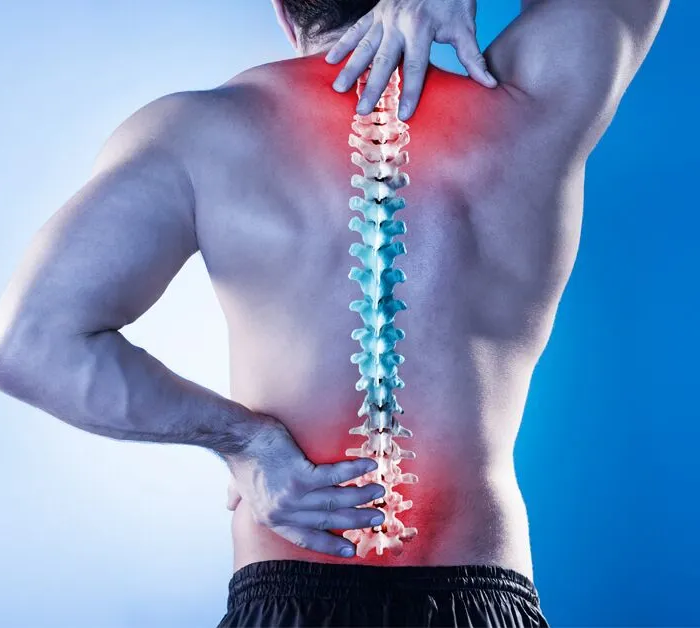
sometimes the acute low back pain persists and transform into chronic form .5-10% of the back-pain patients present as chronic low back pain (CLBP).The CLBP incidence increases with age and highest in the age group of 50-60 yrs. The females are at more risk of CLBP.Obesity , nature of job , job satisfaction, psychosocial factor , family history are also important factor contributing to CLBP .
Low back pain can develop suddenly after an injury or gradually over time due to poor posture, muscle strain, repetitive activities, or age-related changes. It may present as a constant dull ache or a sharp, stabbing pain that worsens with movement. In some cases, the pain may radiate to the buttocks or legs if a spinal nerve is compressed. Patients may also experience stiffness, muscle spasms, and difficulty standing, walking, bending, or performing daily activities. While many cases improve with conservative treatment, persistent or worsening pain should be evaluated by a healthcare professional for appropriate diagnosis and management.
Anyone can develop low back pain, but the risk is higher in adults over the age of 30. People who are overweight, physically inactive, have poor posture, perform repetitive heavy lifting, or work long hours at a desk are more likely to experience back pain. Weak back and core muscles, osteoporosis, and age-related spinal changes also increase the risk. If you are experiencing persistent or recurring back pain, consult Dr. Debabrata Padhy at Top Bone & Joint Clinic, a trusted destination for back pain treatment in Bhubaneswar, for early diagnosis and expert care.
Diagnosis
An accurate diagnosis of back pain is essential for effective treatment. A detailed medical history and physical examination help identify the underlying cause of your pain. Depending on your symptoms, advanced imaging tests such as X-rays, MRI, CT scans, or BMD (DEXA) scans may be recommended to diagnose conditions like slipped disc, sciatica, nerve compression, spinal disorders, spinal abnormalities, fractures, and osteoporosis. Early diagnosis helps in planning the right back pain treatment and preventing long-term complications.
Treatment for back pain is individualised based on the patient’s symptoms, underlying cause, lifestyle, and daily activities. MRI findings alone do not always indicate the need for surgery; however, they help doctors understand the condition and plan appropriate treatment when required.
Most cases of back pain improve with non-surgical treatments such as activity modification, pain-relieving medications, physiotherapy, posture correction, and lifestyle changes. Treating the underlying cause is important—for example, bone-strengthening medications may be recommended for osteoporosis, while conditions like slipped disc or nerve compression may require advanced treatment or surgery in selected cases.
Doctors usually encourage patients to return to normal activities as early as possible, as prolonged bed rest may increase stiffness and muscle weakness. For patients who are not suitable candidates for surgery, image-guided epidural injections may be considered as a minimally invasive treatment option.
Strong back and core muscles help support the spine and reduce the risk of back pain. Regular stretching, strengthening exercises, and maintaining an active lifestyle can help prevent recurring pain. Lifestyle changes that can lower the risk include:
- Maintain a healthy weight.
- Exercise regularly.
- Maintain good posture
- Lift heavy objects correctly.
- Avoid prolonged sitting.